
People Want Better Choices: What Our New Survey Says About Parties, Leaders, and Election Reform
A new national survey finds that many voters feel they are choosing the “lesser of two evils” at the ballot box and would like to see better candidates and fairer ways to elect them.
by Carah Ong Whaley
As 2025 comes to a close and the 2026 midterm elections come into view, a new national survey finds that many voters feel they are choosing the “lesser of two evils” at the ballot box and want better choices on the ballot and fairer ways to elect their leaders. Conducted in November 2025, after the federal government shutdown, the survey was fielded in partnership with AlphaRoc.
Two thirds of respondents (66 percent) agreed that “voters deserve a better way to elect their representatives,” with nearly a third saying they strongly agree. That is a clear sign that many people would like to see changes in how elections work.
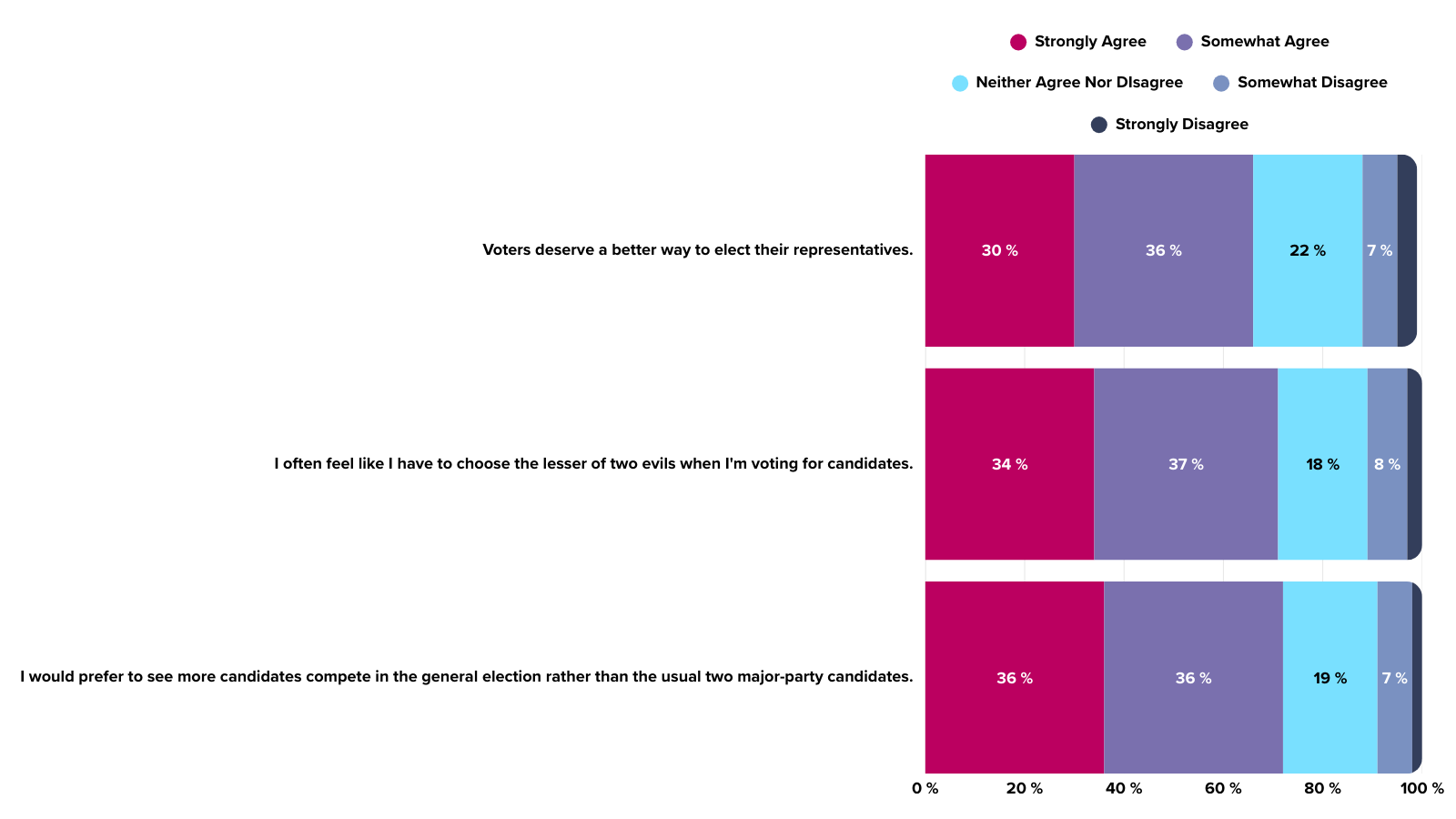
Most voters say the current system is not giving them the choices they want. Two thirds (66%) agree that voters deserve a better way to elect their representatives, 71% feel they often have to choose the “lesser of two evils,” and 72% would prefer to see more than just the two major party candidates on the general election ballot.
The sense of frustration also persisted in their perception of actual voting experiences. Seven in ten voters (71 percent) say they often feel forced to choose “the lesser of two evils” when they cast a ballot. For many, the problem is not that they do not care about politics. It is that the choices they see on the ballot do not feel representative or inspiring.
It is not surprising, then, that people want more voices in the general election. Nearly three quarters (72 percent) say they would prefer to see more candidates compete in the general election, rather than just the usual two major party nominees. Voters are signaling that the current two party, pick one system feels too limited for a country as large and diverse as the United States.
Views of Parties and Political Leaders
The survey also asked about views of the Democratic Party, the Republican Party, and several political leaders, including President Donald Trump, Vice President JD Vance, and respondents’ state and local elected officials. These questions provide important context for understanding why many voters are open to reform, and are in line with findings from Pew Research Center that show that neither party is widely seen as having good ideas, and both are viewed by majorities as “too extreme” and not governing honestly or ethically.
In line with other national polling, respondents in this survey view local and state officials more positively than national parties and leaders. People tend to give better marks to institutions that feel close to everyday life and that are less tied to national partisan conflict, while well-known national figures and party brands attract more intense negative reactions.
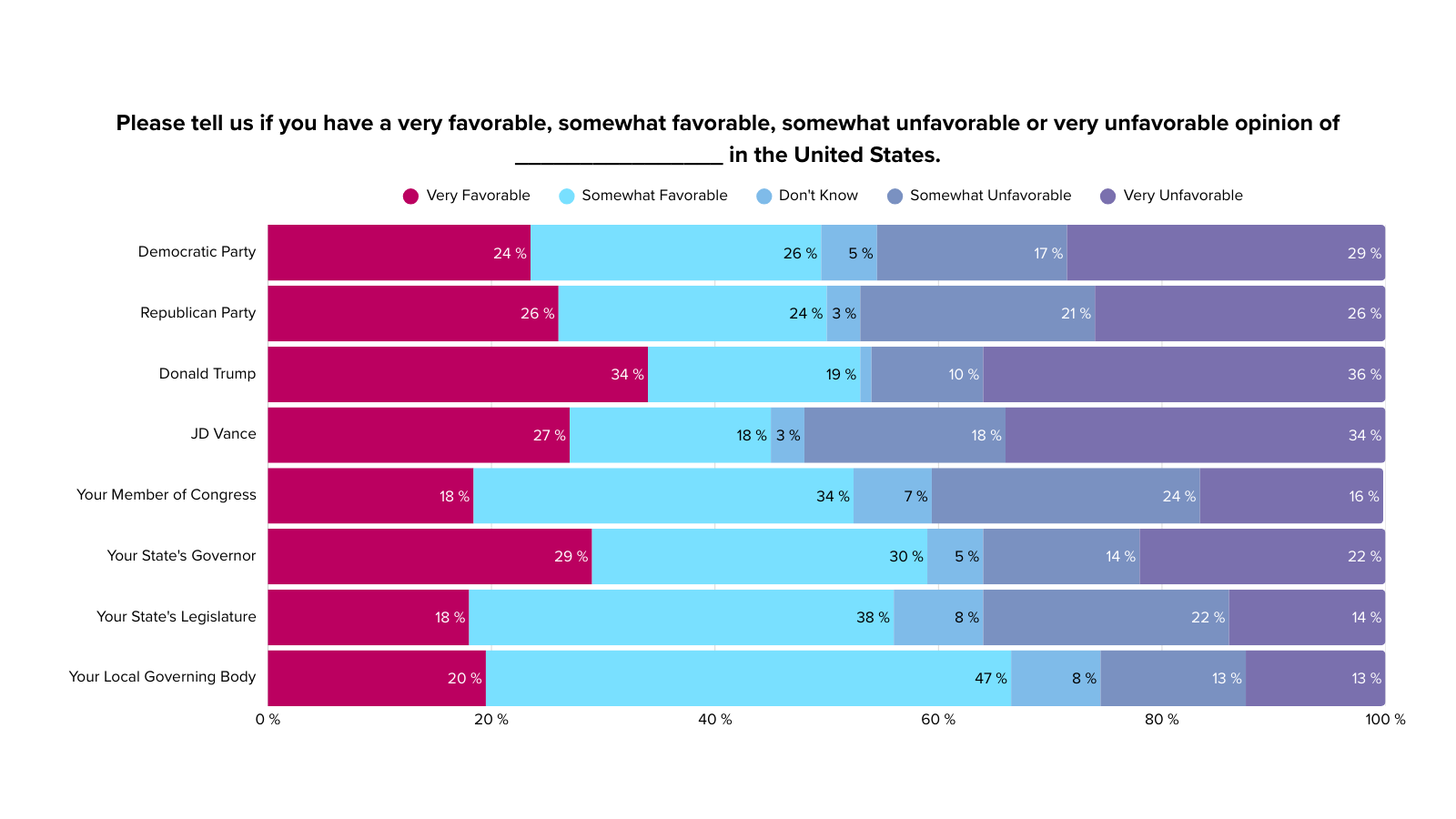
Americans are sharply divided on the national parties and leaders, but feel more positively about government closer to home. Views of the Democratic and Republican parties and of Donald Trump and JD Vance are mixed and often unfavorable, while majorities say they have at least a somewhat favorable opinion of their own member of Congress, governor, state legislature, and especially their local governing body.
Taken together, these patterns suggest an environment where few political actors enjoy approval. Instead, many voters see real limitations in both major parties and in the leaders who represent them. This finding aligns with those of Pew Research Center and Gallup that find dissatisfaction with the parties, significant shares of Americans saying neither party represents them, and many expressing that they “wish there were more parties” that speak for their views.
Adding It All Up
Overall, the survey points to a consistent picture: people are not just unhappy with particular politicians; they question whether the whole system is serving them well. Majorities in the public would like:
More than two major party options in the general election.
Election rules that do not leave them feeling they must pick the “lesser of two evils.”
A better way to translate a wide range of preferences into fair outcomes that will produce leaders who will work to address the problems people are facing in their everyday lives.
So what’s the problem and how can we make change?
While people say they want more meaningful choices and better representation, they also feel constrained by strategic calculations and the rules of the existing system. For example, in an October 2025 Gallup survey, respondents expressed concern about “wasting” a vote or helping elect the least-preferred candidate. That concern makes many people reluctant to support third-party candidates in practice, even though they consistently say that they like the idea of more options.
Thus, we have to focus on fixing the root of the problem: creating an election system that centers fairness, accountability to voters and electing leaders that will be more representative of the people they are supposed to serve.
Consensus Choice is designed with these goals in mind. By encouraging real competition, it gives parties and candidates a reason to listen to everyday people. In Consensus Choice, every voter gets an equal say in the outcome. The election winner is the candidate that best and most fairly reflects the voters’ choices.
If you believe voters deserve fairer, more representative elections, now is the time to learn about Consensus Choice, talk about it in your community, and ask your leaders to explore how it could work where you live.
